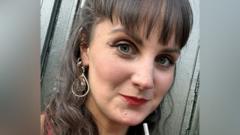
We saw signs of domestic abuse, but we didn't know how to protect Stacy
Stacy Hunter was killed by her estranged husband weeks after he was released on bail - her family wish the authorities had intervened further.
He said Stacy was dealing with complex and conflicting circumstances - the fear that someone who "should" have been protecting her was dangerous, as well as "fear from outsiders looking in".
"If somebody is controlling, when that creeps in, it's probably going to be very difficult to get out of that situation," said Sean.
"I think that's what we witnessed over a long period of time, but… it's hard to know what you can do. Because you don't want to get fully into other people's business – their family, household and everything else."
Ann said Stacy also had to consider stability for her children.
"She wanted to keep them in their own home, in their own routine, with their own school, neighbours, friends, the animals around them," she said.
"She felt 'why should she run?' Although she was scared she still felt kind of protected with the kids."
Stacy's case has made a significant impact on her community – a campaign calling for a "Stacy's law" has been started by Lynne Mackenzie, herself a domestic abuse survivor who lives a few miles from the isolated cottage where Stacy was killed.
Lynne's petition, which Stacy's family supports, calls for high-risk domestic abuse perpetrators or suspects released on bail to have their location monitored using GPS equipment.
This could include individually assessed exclusion zones around victim's homes or workplaces and alerts that trigger police responses when conditions are breached.
Scottish ministers have previously faced criticism over the slow rollout of Global Positioning System (GPS) equipment, which is used far less in Scotland than in some other countries.
Mike Nellis, emeritus professor of criminal and community justice at the University of Strathclyde and one of the UK's leading experts on electronic monitoring, said it was perfectly feasible to introduce such a system.
But he cautioned that no system was fool proof, and that some women's support groups have in the past voiced concern that such systems might give a false sense of security.
He said: "I think probably every jurisdiction that has used it has at one point in time had an offender who still managed to assault, injure or kill the victim."
The Scottish government said it was listening to victims and support organisations and would carefully consider the petition.
Sean and Ann now consider Stacy's death to be confirmation that "signs [of abuse] are real and need to be addressed".
Mair was ordered by a court not to approach Stacy, but Ann said that any warnings he received would have made no impact given everything she had seen of his character.
"There was nothing in place to deter him or make him think about it, of consequences, no fear," she said.
"It was only a piece of paper in the end to him and someone telling him not to do it. With his coercive and controlling behaviour, he wouldn't listen to it."
Ann and Sean are due to meet First Minister John Swinney on Thursday to discuss what can be done to better support women facing similar circumstances.
Scotland's victims minister, Kirsten Oswald, said her thoughts were with Stacy's family.
She said: "As the first minister has made clear, government has a vital role to play in tackling violence against women and girls, but lasting change requires all of us to play our part.
"Men, in particular, must challenge sexism, confront abusive behaviour and help create a culture where every woman and girl can live free from violence, abuse and fear.
"While decisions on bail and remand are always a matter for the independent court, bail can be electronically monitored."
Stacy's family now prefer her to be remembered by her pre-marriage surname Hunter, rather than her husband's name Mair.
Radio Scotland Mornings examined Lynne McKenzie's petition in a series on violence against women - you can listen to the full programme here.
If you have been affected by any of the issues in this story, help and support is available at BBC Action Line.
Originally published by
BBC News
Aggregated from a public feed. Read the original at the source for the publisher's full presentation.
View original on bbc.co.ukContinue reading